
Peristaltic Pump Flow and Head FAQ
Short engineering answers to common questions about flow, suction, discharge conditions, calibration, pulsation, and tubing life.
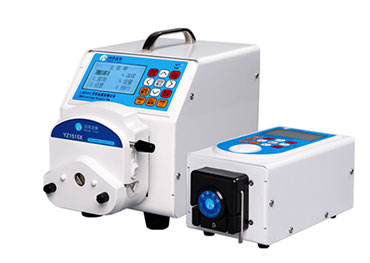
Peristaltic pump questions often combine reference catalog values with conditions that substantially change real performance. These answers focus on the engineering checks needed before a flow or pressure value becomes an application requirement.
Always verify the selected model, head, tubing, and operating condition in the current datasheet and manual.
How much flow can a peristaltic pump provide?
Flow depends on tube size, pump head, speed, fluid, suction and discharge conditions, and tubing condition. Use current reference tables to shortlist a compatible combination, then measure the real installed path.
Select normal flow with margin from speed and duty limits. Maximum reference flow should not automatically become a continuous operating point.
What determines flow accuracy?
Average delivery is affected by tubing tolerance, occlusion, calibration, speed control, pressure, viscosity, temperature, bubbles, and wear. Short measurement windows also show roller pulsation more strongly.
Calibrate at the outlet with the production fluid and define whether the requirement applies to instantaneous flow, average flow, or total dispensed volume.
What do suction lift and pump head mean?
Suction lift describes the inlet-side elevation and pressure challenge. Discharge head includes outlet elevation and downstream resistance. Line loss from narrow tubing, fittings, filters, viscosity, and flow velocity adds to both sides of the pressure budget.
Excessive suction restriction can prevent full tube recovery; excessive discharge resistance can change flow or damage the tubing. Test the boundary conditions of the real system.
How should pulsation and tubing life be managed?
Roller count, tube size, speed, compliance, downstream volume, and optional damping influence pulsation. Evaluate the receiving process rather than assuming one acceptable ripple value for every use.
Tubing life depends on material, occlusion, speed, pressure, temperature, chemical exposure, and duty. Establish replacement from application testing, flow drift, and physical inspection rather than a universal hour value.
- Prime consistently and remove trapped gas before comparison tests.
- Record flow per revolution to help separate drive speed from tube behavior.
- Recalibrate after tubing, head, fluid, or pressure changes.
Engineering takeaways
- Reference values depend on stated test conditions.
- Define flow, pressure, pulsation, and life requirements separately.
- Use application testing to set calibration and maintenance limits.