
When to Use a Peristaltic Pump
Decide whether a peristaltic pump fits the application by balancing fluid isolation and serviceability against pulsation, tubing wear, and pressure limits.
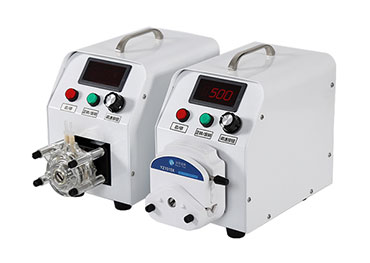
Peristaltic pumps are often selected when keeping fluid inside a replaceable tube is more valuable than eliminating every effect of tubing compliance and roller pulsation. They are a strong architectural option in the right operating envelope, not a universal solution.
A selection decision should compare process needs and failure modes with alternative pump principles.
Reasons to consider peristaltic pumping
The fluid normally contacts only the tubing, which can simplify fluid-path replacement and reduce contact with pump mechanisms. Reversible motion, self-priming behavior, and the ability to handle some entrained gas can also be useful in instrument workflows.
Applications may include transfer, wash, sampling, waste handling, reagent delivery, and dispensing where the specified tubing is compatible and calibrated performance meets the requirement.
Limitations to evaluate early
Roller action creates pulsation, tubing wears, flow changes with pressure and tube condition, and available pressure is limited by the selected head and tubing. Some fluids are unsuitable because of chemical attack, adsorption, extraction, permeability, or particle concerns.
High-precision continuous flow may require calibration, damping, multiple channels, or another pump type. High pressure, very small pulse volume, or long unattended tube life can also point toward a different architecture.
Use a weighted selection matrix
Compare fluid isolation, target flow, accuracy, pressure, pulsation, viscosity, gas handling, material compatibility, maintenance, cleaning, controls, noise, size, cost, and qualification burden. Weight each criterion by application importance.
Test the preferred combination in the real duty cycle and verify model-specific capabilities with the current datasheet and application conditions.
Engineering takeaways
- Choose peristaltic pumping for relevant fluid-isolation and maintenance advantages.
- Account for pulsation, tube wear, pressure limits, and calibration.
- Compare architectures with a documented application-specific matrix.