
How to Set and Calibrate Peristaltic Pump Flow
Set an initial speed, measure real delivery, calculate a correction, and record a calibration that matches the actual fluid path.
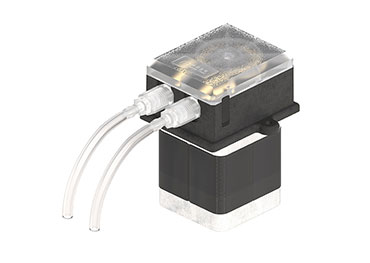
A speed setting is not the same as a verified flow rate. Peristaltic delivery depends on the installed head, tubing, fluid, pressure, temperature, and tube condition, so calibration should connect the controller setting to a measured result.
The following method works for a new setup and for periodic recalibration of an existing process.
Prepare a repeatable test
Install the specified tubing without twist, prime the complete path, remove visible bubbles, and establish the normal suction and discharge conditions. Use the production fluid when practical, or document the density and viscosity difference of a substitute.
Choose a collection time long enough to average roller pulsation and measurement resolution. For gravimetric testing, use a suitable balance and convert mass to volume with the liquid density at the test temperature.
Calculate and apply the correction
Set an initial speed from the current catalog or an earlier calibration, measure delivered volume, and calculate actual flow as collected volume divided by elapsed time. A first correction can be estimated as new setting = old setting x target flow / measured flow when the operating region is approximately linear.
Repeat the measurement after adjustment. For a wide operating range, calibrate several points and use an interpolation table or fitted curve instead of one correction factor.
Control calibration over time
Save the pump, head, tubing part number and lot, installed date, fluid, temperature, pressure condition, speed, test method, result, and operator. Define acceptance limits that reflect the process requirement and measurement uncertainty.
Recalibrate after tubing replacement, head adjustment, fluid change, pressure change, maintenance, or unexplained drift. Reference flow data in a manual remains a starting point; verify the selected model and current application conditions.
- Use the same priming procedure each time.
- Measure at the outlet used by the process.
- Do not hide an unstable system by repeatedly changing only the speed setting.
Engineering takeaways
- Measure actual outlet delivery before accepting a flow setting.
- Use multi-point calibration when the process has a broad speed range.
- Tie recalibration to tubing condition and fluid-path changes.