
Peristaltic Tubing Flow Rate Selection
Treat catalog flow values as a starting point and build a test matrix around the selected tubing, pump head, and liquid.
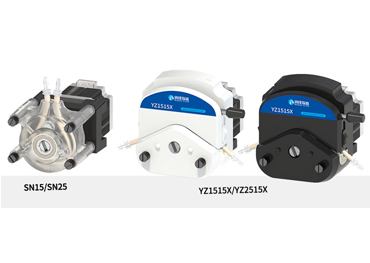
Catalog tables help identify possible peristaltic tubing sizes, but they describe tests performed with particular heads, speeds, fluids, and environmental conditions. Engineering selection converts those reference points into an application-specific operating window.
Use the table to shortlist combinations, then qualify the complete fluid path.
Read reference data in context
Check which pump head, tubing material, tube number, speed, liquid, temperature, and pressure condition produced the published value. Do not interpolate between unrelated head or tubing families as though they share the same displacement behavior.
When a table lists maximum reference flow, it does not necessarily identify the preferred continuous operating point. Review the model's speed range, duty rating, and tubing-life considerations in the current documentation.
Build a candidate operating window
Estimate the speed required for minimum, normal, and maximum flow for each compatible tube. Remove candidates that force normal operation too close to a control limit or create unsuitable pulse volume, velocity, or line loss.
Consider whether the process needs bidirectional operation, rapid priming, low-shear handling, multi-channel matching, or frequent tube replacement. These requirements may favor a different head or tubing size even when two options reach the same average flow.
Confirm with a test matrix
Measure at several speeds and at expected pressure, temperature, and viscosity limits. Include new and conditioned tubing if the process runs long enough for tube behavior to change.
Record measured flow per revolution and create a calibration curve for the chosen combination. Verify all product-specific values against the current manual and application conditions.
Engineering takeaways
- Use catalog flow values to shortlist, not to skip validation.
- Select a normal operating point with control and service-life margin.
- Create a measured curve for the actual installed combination.