
Peristaltic Pump Droplet Dispensing
Build a repeatable droplet process by coordinating pump motion, outlet geometry, wetting, timing, and cut-off behavior.
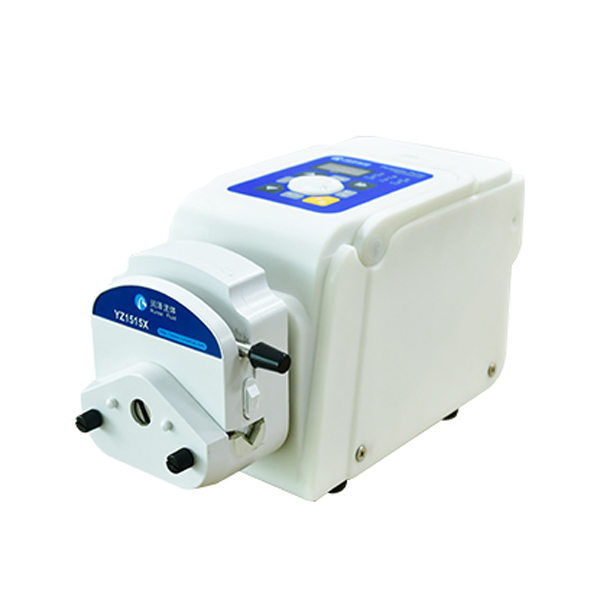
Droplet dispensing with a peristaltic pump is a coordinated fluidic process. Pump displacement creates flow, but droplet volume and release also depend on outlet geometry, surface wetting, liquid properties, tubing elasticity, and the timing used to stop or reverse flow.
The target should be a measured droplet distribution, not only a nominal pump speed or run time.
Control droplet formation
Outlet inner and outer diameter, tip shape, orientation, cleanliness, and surface energy affect how liquid accumulates and detaches. Viscosity, surface tension, density, temperature, and evaporation change the same behavior.
Mount the outlet rigidly and keep its position relative to the receiving surface consistent. Avoid air bubbles near the outlet because compressibility can delay delivery and create satellite droplets.
Coordinate motion and cut-off
Develop a sequence with approach speed, dispense motion, dwell, optional reverse step, and interval between droplets. A brief reverse motion can reduce trailing liquid in some systems, but too much can pull air into the tip or change the next droplet.
Roller pulsation can make droplet size depend on the pump's rotational phase. If this is significant, use position-aware control, more averaging displacement, suitable damping, or a different dispensing architecture.
Measure the process window
Collect enough droplets to calculate mean volume, spread, missed dispense rate, satellites, and drift. Gravimetric measurement is useful when the balance resolution and liquid density support the target volume.
Test fluid level, temperature, tubing age, idle time, outlet condition, and pressure boundaries. Verify pump, head, and tubing limits with current documentation before setting production parameters.
- Prime and condition the outlet before the measurement run.
- Define how the tip is cleaned or replaced.
- Recalibrate after tubing, tip, fluid, or sequence changes.
Engineering takeaways
- Droplet volume depends on the outlet and liquid as well as pump displacement.
- Tune the complete motion sequence, including dwell and cut-off behavior.
- Qualify a distribution across environmental and service-life conditions.