
How to Verify Switching Valve Position Accuracy
Verify commanded position, actual port connection, repeatability, and fluidic isolation with a documented test fixture.
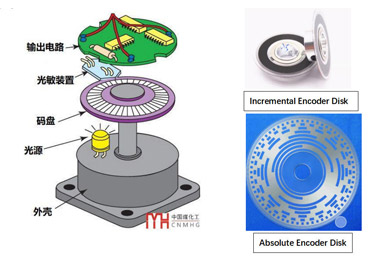
A controller can report the expected valve position while the connected fluidic path is misaligned, leaking, blocked, or connected to the wrong port. Position verification should therefore combine command evidence, mechanical reference, and fluidic function.
The test method must be specific enough to reveal repeatability, direction-dependent error, and incorrect recovery after a fault.
Define the required result
Decide whether the application needs correct port selection, angular accuracy, repeatable sealing, low cross-port leakage, bounded switching time, or all of these. Convert the system need into measurable acceptance criteria before choosing a fixture.
Record valve model, rotor or stator configuration, port map, fittings, fluid, pressure, control mode, firmware, and encoder behavior. A port number without the physical map is not sufficient test evidence.
Use an independent fixture
Command each position from a known start condition and verify the connected path with controlled pressure, flow, vacuum, conductivity, dye, or another appropriate method. Monitor non-selected ports to detect cross-port communication or leakage.
Approach positions from both rotation directions where the mechanism permits it. Repeat after power cycling, emergency stop, communication interruption, and any reset sequence used by the instrument.
Evaluate repeatability and life effects
Run enough cycles to characterize intermittent errors and test at expected temperature, pressure, and contamination conditions. Inspect how wear, deposited material, tubing load, connector torque, and mounting strain affect the result.
Keep raw command logs and fixture measurements synchronized by time. Verify product-specific tolerances and operating limits with the current datasheet and application conditions.
- Include every port and transition used by the application.
- Test incorrect and interrupted sequences, not only normal switching.
- Separate position-reporting faults from sealing or flow-path faults.
Engineering takeaways
- Verify the actual fluidic connection, not only the encoder value.
- Test approach direction, reset, interruption, and repeated cycling.
- Maintain a physical port map and synchronized command record.