
How to Size Barbed Check Valves for Microfluidics
Match cracking behavior, pressure drop, wetted materials, and barb geometry to a microfluidic operating envelope.
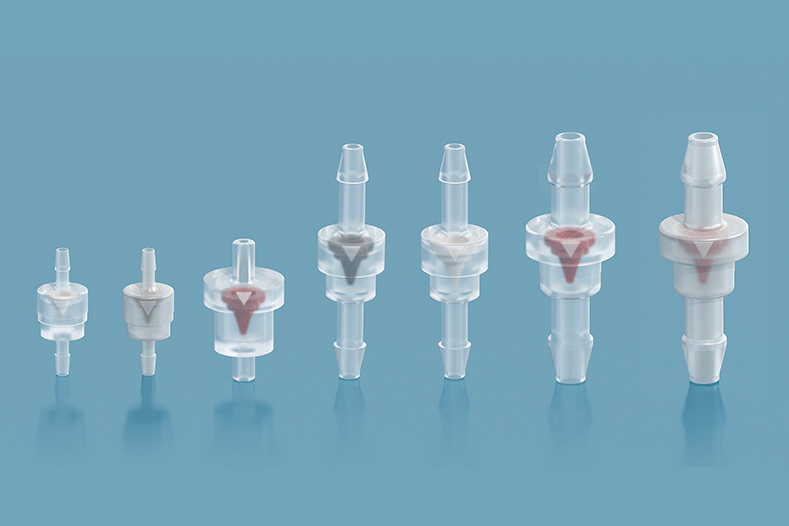
A barbed check valve must open within the available forward pressure, limit reverse flow, and connect to the selected tubing without creating excessive dead volume or mechanical damage. Selecting only by barb diameter misses several important system effects.
Cracking pressure is the start of opening, not a complete description of flow performance.
Define the pressure budget
List the minimum and maximum source pressure, suction condition, downstream resistance, elevation, and transient pressure. The valve needs enough differential pressure to open throughout the required flow range while leaving margin for tubing, fittings, filters, and other components.
Review the pressure-drop curve at the intended fluid and flow when available. A valve may crack at a low pressure but still create an unacceptable drop at the operating point.
Check the fluidic and mechanical interfaces
Confirm wetted materials against the exact fluid, concentration, temperature, and exposure time. Also review gas permeability, swelling, extraction, adsorption, and cleanliness requirements when they matter to the assay or instrument.
Match barb geometry to tubing inner diameter, wall thickness, hardness, and retention method. Too much stretch can damage or permanently deform soft tubing; too little interference can leak or disconnect. Verify assembly force and retention with production parts.
Test dynamic behavior
Measure forward flow, reverse leakage, opening delay, trapped volume, bubble retention, and response after idle time. Pulsating pumps can repeatedly open and close a valve, so include the real waveform instead of testing only steady pressure.
Test at temperature limits and after representative cycling. Product-specific dimensions, pressure ratings, and material options should be confirmed with the current datasheet and application conditions.
- Orient the valve consistently during comparison tests.
- Include connector and tube compliance in transient testing.
- Inspect for trapped gas at the valve transition and barb shoulders.
Engineering takeaways
- Use the full pressure-drop curve, not cracking pressure alone.
- Validate barb retention and wetted-material suitability with the actual tubing and fluid.
- Test reverse leakage and transient response in the real pump waveform.