
PEEK Fitting Replacement: Compatibility Checklist
Compare thread form, engagement length, tubing interface, seal geometry, bore, wetted volume, material, and operating conditions before replacement testing.
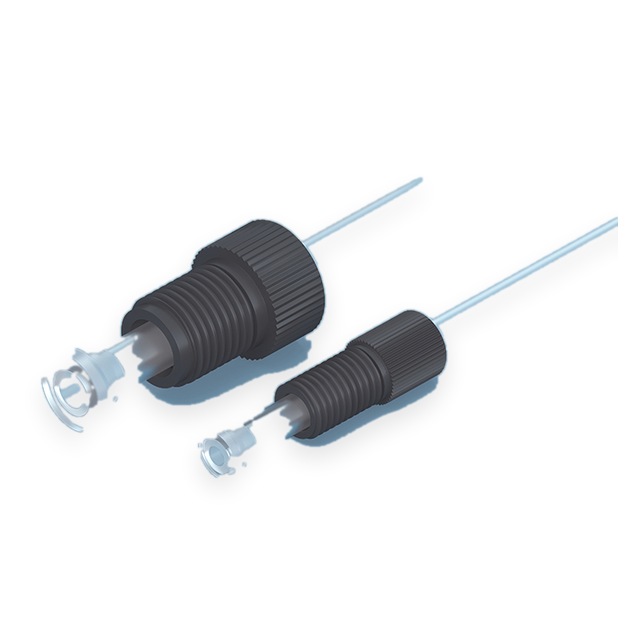
A PEEK fitting replacement cannot be approved because it looks similar to the current part. Compare the mechanical interface, seal, tubing, flow path, material, and operating conditions before instrument testing.
V9.76 distinguishes 10-32 UNF coned and 1/4-28 UNF flat-bottom interfaces, thread lengths, bores, tubing outer diameters, materials, and wetted volumes by model.
Quick answer
Compare exact part numbers and drawings, thread form and engagement length, coned or flat-bottom geometry, tubing OD and ID, ferrule or seal, insertion depth, bore alignment, wetted volume, material, pressure, temperature, assembly space, and tightening method.
Thread name is not enough
V9.76 page 15 lists 8 mm internal thread length for 1/4-28 UNF and 6.5 mm for 10-32 UNF on the referenced internal fittings, with different geometries, through bores, and wetted volumes. These details affect whether a candidate should proceed to testing.
Validate before adoption
Confirm material suitability for the actual fluid exposure, assemble with the intended tubing and mating port, then test pressure, leakage, dead volume, carryover, response, alignment, and repeated connection as applicable.
- Do not claim exact equivalence from appearance or thread name.
- Do not promise direct or drop-in replacement before testing.
- Do not claim universal chemical compatibility for PEEK or a complete assembly.
Engineering takeaways
- Compatibility covers the complete interface and operating condition.
- Thread form alone does not establish interchangeability.
- Approve only after application-specific testing.