
How to Choose Peristaltic Pump Tubing
Choose tubing as a functional pump component by reviewing resilience, dimensions, chemical exposure, temperature, and replacement interval.
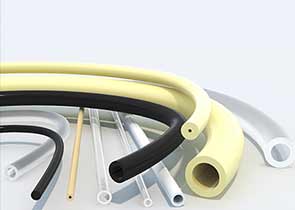
Peristaltic pump tubing is simultaneously the fluid conduit, compression element, and wear part. Ordinary flexible tubing may fit into a head but still recover poorly, wear quickly, shed material, or deliver unstable flow.
Selection should address material, dimensions, mechanical response, fluid quality, and maintenance as one specification.
Confirm head compatibility first
Use tubing sizes and wall thicknesses approved for the selected pump head. Roller geometry and occlusion depend on the outside dimensions and compressive response. An unsupported tube can create under-occlusion, excessive load, rapid fatigue, or unreliable retention.
Specify the exact tubing part number or controlled dimensions and material. A generic inner-diameter callout is not enough for repeatable pumping performance.
Evaluate the fluid and process
Review chemical compatibility at the actual concentration, temperature, and contact time. Also consider adsorption, extraction, gas permeability, particle shedding, sterilization, opacity, regulatory documentation, and whether the fluid is sensitive to contamination.
Viscosity, solids, suction lift, discharge pressure, and target flow affect how the tube refills and how much it deforms. Test the fluid under realistic operating conditions rather than relying on appearance or material name alone.
Define installation and replacement controls
Specify tube length, routing, bend radius, clamps, barb engagement, installation method, and occlusion setting. Keep the roller track free from twists and external tension.
Establish a replacement interval from measured flow drift, visible wear, surface cracking, flattening, leakage risk, and process criticality. Recalibrate after replacement. Current product manuals and supplier compatibility data should be verified for the selected application.
- Store tubing within the supplier's stated environmental limits.
- Track installation date and operating hours where useful.
- Do not reuse tubing when the process or cleaning validation prohibits it.
Engineering takeaways
- Use tubing designed and dimensioned for the selected pump head.
- Screen chemical and fluid-quality risks beyond simple swelling.
- Control installation, service life, and recalibration.